- +90 (507) 628 4018 /+447551459375
- Monday - Friday 09:00 am - 05:00 Pm
- Antalya, Türkiye

Jersey
Citizenship by Investment Overview
Investment
Minimum real estate investment of GBP 1.75 million and annual taxes of GBP 250,000
Key Benefit
Well-regulated and mature finance and trust industry
An Introduction to Jersey Residence by Investment
The Channel Islands, including Jersey and Guernsey, are situated about 14 miles from the coast of France and 120 miles from Southampton, England.
The island of Jersey is not only known for its scenic beauty, but it also enjoys a high standard of living and offers a variety of options for leisure, cuisine, and cultural activities. It is a paradise for golfing enthusiasts and people interested in water sports. Residents also benefit from a high level of modern communication and associated facilities.
All financial institutions are regulated and supervised in Jersey by the government’s Finance and Economics Committee. Supervision is implemented by the Jersey Financial Services Commission, which exerts close control over all financial institutions and trust companies.
High-Value Residence Regime
From a tax perspective, Jersey is popular for its low rate of income tax and lack of estate duties. The application procedures for residence in Jersey are extremely efficient and the entire application process can usually be completed in as little as one month unless additional information is required.
The purchase and occupation of all residential real estate in Jersey is controlled by the Jersey government, through its housing committee. Essentially, only persons possessing Jersey housing qualifications are granted consent to purchase property.
It is possible, however, for high-net-worth individuals to obtain the 2(1)E license, which derives its name from Jersey’s current housing law.
To achieve high-value residence status and be eligible to purchase property in Jersey, the prospective applicant must make a major contribution to the island’s tax revenues. At the present rates of tax, the annual tax contribution would be GBP 250,000, calculated on a sliding scale based on 20% of the first GBP 1.25 million of worldwide income and 1% on all income thereafter. Applicants are required to provide financial and other information in support of their application to take up residence in Jersey, evidencing sufficient capital wealth in order to produce in excess of GBP 250,000 in tax revenues for the island.
Once high-value residence status has been granted, the applicant may apply for consent to purchase a property and will be granted the same status as other residents on the island. Residents can be employed, employ others, set up their own businesses on the island, and are expected to purchase or lease a single residential property worth more than GBP 1.75 million for an apartment and GBP 3.5 million for a house.
The regulations for citizenship are the same as in the UK, and the British Government is responsible for administering the laws covering British citizenship through the British Nationality Act 1981, which also applies to Jersey.
An International Finance Center
Jersey’s successful role as an international financial center for more than 40 years is largely due to its ability to maintain a stable and high-quality business environment, which is an important factor for international investors.
The Jersey Financial Services Commission, an independent body, is responsible for the administration of laws relating to the industry. It is also responsible for the development of the financial services industry on the island. Most of Jersey’s working population is professionally trained and work in the finance and support industries. The availability of internationally recognized accountancy and legal experts ensures smooth and professional handling of business.
An increasing number of clients worldwide choose Jersey as a preferred location mainly because it has retained a reputation for its integrity while evolving to cater to the growing needs of global finance.
A Business- and Investor-Friendly Jurisdiction
Jersey is an internationally recognized financial center with a reputation for excellence in quality and expertise. The island’s location enhances its position as a finance center with easy accessibility to the UK and mainland Europe, while its judicial independence and self-governance make it attractive to businesses and investors. The communication facilities in Jersey are of a high standard, with efficient international telecommunication, information technology, and postal and courier services. e-Business initiatives are also expanding and providing the finance industry with additional support.
Jersey is also a popular host to many different types of association and corporate events from Europe, and many in the pharmaceutical, communication, manufacturing, and finance sectors make it their destination of choice.
Country Information
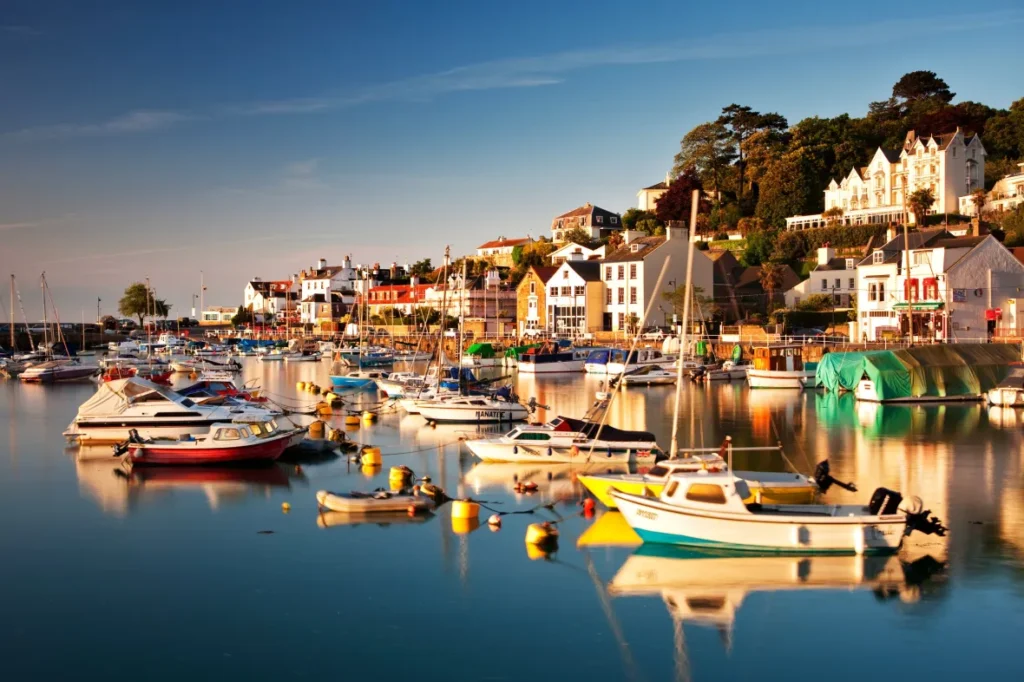
Jersey’s status as a small island that boasts sheer beauty, a rich history, and picturesque scenery continues to amaze and attract visitors to this popular destination every year.
Population: | 103,000 |
Languages: | English, French |
Economy: | Finance, Tourism |
Currency: | British pound |
Living in Jersey
Jersey is the largest of the Channel Islands, which are situated in the English Channel just a few miles from the French coast. The Channel Islands are not part of the United Kingdom but are a part of the British Isles, which gives them a unique constitutional link — one that offers complete financial and fiscal independence. Jersey is neither represented in the United Kingdom parliament nor involved with, or subject to, the judicial and administrative systems of the United Kingdom.
Jersey — A Tradition of Excellence in Financial Services
The Channel Islands have a sophisticated financial and trust industry, in which Jersey represents 43% of the island’s economy and employs over 10,000 people, forming 20% of the island’s workforce. Jersey welcomes quality business from clients all over the world but maintains strict safeguards in order to protect its excellent reputation. Over the past decade, legislation has been introduced to further reinforce Jersey’s position.
All financial institutions are regulated and supervised in Jersey by the government’s Finance and Economics Committee. Supervision is implemented by the Jersey Financial Services Commission, which exerts close control over all financial institutions and trust companies.
Jersey has one of the world’s most sophisticated trust services industries and a long tradition of excellence in this sector. Particularly for the administration of trusts and international corporate structures, Jersey has certain advantages over most other jurisdictions, namely the following:
- A long tradition of economic and political stability
- Excellent reputation for integrity, quality, and expertise
- Well-regulated and mature finance and trust industry
- Major banking center
- Convenient location in Western Europe
Economy
Jersey’s economy has evolved from a community traditionally reliant on agriculture, boat building, fishing, and knitwear to tourism and finance. The British pound and Jersey pound (valued 1:1) form the retail currency, with all major currencies accepted for financial transactions.
Finance
Although the finance industry did not exist before 1962, it now provides 55% of the island’s GDP and 60% of government tax income. There are now 55 banks and over 33,000 registered companies in Jersey. The industry is attractive due to Jersey’s stable government and its proximity to both UK and Europe. Jersey’s gross national income (GNI) per capita is among the highest in the world. The financial services sector (banking, trust, and fund administration and management, accountancy, and legal activities) now accounts for just over half of all economic activity in Jersey and employs almost a quarter of the workforce.
Tourism
Tourism contributes about 25% of the island’s GDP. The largest groups of visitors come from the UK, and the island is also a popular destination for those from Germany, France, and the other Channel Islands. Jersey offers an array of world-class hotels with excellent facilities, a variety of restaurants and bars, and a lively nightlife.
Agriculture
Jersey’s agricultural industry began to flourish with the development of the Jersey cow and the Jersey Royal new potato. The Jersey cow evolved by selective breeding during the first half of the 19th century and a steady export business grew as a result of the international recognition of the quality of the breed. The Jersey cow is an important part of Jersey’s living heritage and is the trademark of the skill of cattle breeders down the centuries. In 1879, Hugh de la Haye grew the first Jersey Royal new potato and within 10 years, over 65,000 tons were shipped out to the English market. Today, agriculture provides 5% of the island’s GDP. Major exports include a range of dairy products associated with the Jersey cow, Jersey Royal potatoes, and a wide range of market garden crops and flowers.
Education
Education is of paramount importance to Jersey’s government and its people. The education system in Jersey is of a very high standard and is based on the UK’s national curriculum. The education department provides education to some 10,500 school children. There are 23 primary schools (including 10 nursery units), five secondary schools, and a choice of private schools. There are no universities in Jersey, so pupils must continue their higher education in the UK or elsewhere. However, further education is provided within the island at University College Jersey, the Higher Education Department of Highlands College, which offers a wide variety of academic and vocational courses and adult education courses.
Ready to Explore Your Global Opportunities?
Let DLB Global guide you in securing the right investment, residence, or citizenship solution. Connect with our experts today and start your journey with confidence.